

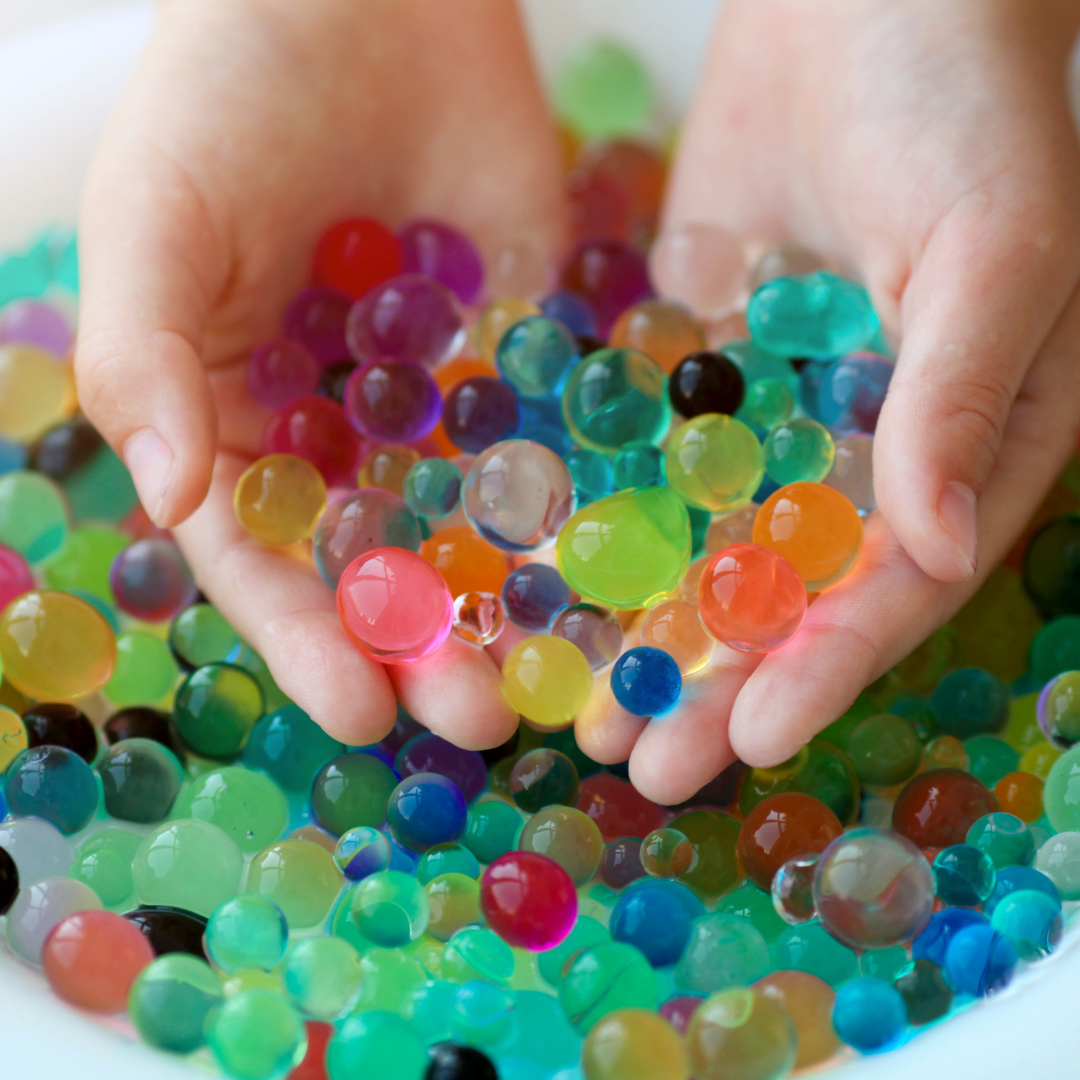
Water beads may look like harmless, colorful toys, but they can pose a serious danger to young children if swallowed. These tiny beads absorb water and expand inside the body, potentially causing life-threatening intestinal blockages that often don’t show up on X-rays. Between 2019 and 2024, U.S. poison centers reported more than 20,000 water bead ingestions in children under 6 years old, with toddlers accounting for nearly two-thirds of cases. While many children recover without complications, some require hospitalization or emergency surgery, making awareness and early medical evaluation essential.
What Are Water Beads?
Water beads are small, colorful gel beads commonly found in sensory bins, crafts, decorative displays, and toy blasters. Because they resemble candy, toddlers and young children may accidentally swallow them.
Once inside the body, the beads continue absorbing liquid and can expand significantly, creating a dangerous intestinal blockage that may require emergency surgery.
Signs and Symptoms of Water Bead Ingestion
One of the biggest challenges with water bead ingestion is that symptoms don’t always appear right away. Children may seem perfectly fine for several hours, or even a couple of days, before becoming sick.
Watch for:
- Persistent vomiting (the most common symptom)
- Abdominal pain or swelling
- Constipation or diarrhea
- Refusing to eat
- Dehydration
- Coughing, choking, or difficulty breathing
Remember: not every stomach illness during the summer is a tummy bug. If your child had access to water beads, it’s important to mention it to their healthcare provider.
Why Water Beads Can Be Difficult to Diagnose
Unlike many swallowed objects, water beads are often invisible on standard X-rays, making them difficult to detect.
If your toddler has persistent vomiting or unexplained stomach pain but a normal X-ray, water bead ingestion may still be the cause. Additional imaging or evaluation may be needed.
Early recognition is critical because delayed diagnosis can increase the risk of bowel obstruction and emergency surgery.
What Should Parents Do?
If you think your child swallowed a water bead:
- Contact Poison Control immediately for guidance.
- Seek medical care right away if your child develops vomiting, abdominal pain, bloating, dehydration, or trouble breathing.
- Don’t rely on a normal X-ray to rule out ingestion.
- Go to the emergency room immediately if symptoms suggest an intestinal blockage.
The sooner your child is evaluated, the better the chances of avoiding serious complications.
How to Prevent Water Bead Injuries
The safest approach is prevention.
Parents can help protect their children by:
- Keeping water beads out of reach of young children.
- Avoiding water bead toys in homes with children under 3 years old.
- Supervising older children during sensory play.
- Cleaning up spilled beads immediately.
- Choosing safer sensory play alternatives for toddlers.
New Water Bead Safety Standards
Following several serious injuries and deaths, new federal safety standards took effect in March 2026. These regulations limit how much water beads can expand, require stronger warning labels, and establish additional product safety testing.
Although these changes are an important step forward, accidental water bead ingestions continue to happen, making parent awareness just as important as ever.
When to Visit Little Spurs Pediatric Urgent Care
If your child has unexplained vomiting, abdominal pain, or other concerning symptoms after possible exposure to water beads, don’t wait to seek medical care. Our pediatric providers can evaluate your child, determine the next steps, and coordinate emergency care if needed.
Find your nearest Little Spurs Pediatric Urgent Care location:
littlespurspedi.com/locations